24 January 2018

Water on My Mind

I joined the gym two weeks ago to swim – it’s a risk-free form of exercise which works the whole body and encourages proper breathing. I also find it meditative. It’s taken me about a year to get my act together – I hate gyms but I have always loved swimming and some form of regular and sustainable exercise has been long overdue. I am quite impressed with the local gym’s water-saving measures (buckets to collect water in the showers for use in the toilets, 2-minute timers and the sauna and steam rooms have been shut down).

Access to something that I have taken for granted all my life has taken up so much of my consciousness. Ignorance, mismanagement and laissez-faire attitudes to preparing for the water crisis in Cape Town have led us to the point where it is very likely that access to water will be highly controlled. As the crisis deepens those who can afford to, are waiting months for boreholes to be dug, trucking in water for their pools and gardens, stockpiling bottled water while others are squabbling in queues to collect water from springs. For the last few weeks the council comes to flush out the sewage drain in our road which keeps blocking. They say it keeps clogging because of old tree roots in the system. I have my own theory – there is so much less water going through the system as we cut down on flushing that it’s bound to cause the system to back up and block.

The waft of sewage, not flushing the toilet and using the least possible amount of water leaves me with a constant feeling of not being hygienic enough. It’s scary. Which brings me to a a book I came across about four or five years ago, written by a South African writer, Karen Jayes, For the Mercy of Water, a speculative fiction work which actually, at the time, didn’t seem too much of a stretch to imagine. Now, of course, the ideas of a world where water is at a premium and guards have to watch over the source and supply have become much more real.

Front Cover
Image from Google Books 

In Jayes’ book, a country, which she hasn’t identified, is in the midst of a severe drought and water has become a very valuable resource. She has chosen to only name only the girl characters, as she said in a seminar, that often it’s the girls who are most abused in situations of conflict. She steers away from any identifying descriptions which may be interpreted as racial. This ‘anonymity’ creates an equality, albeit a surreal-ness, but reinforces the view that this could be happening to any of us, anywhere in the world.  And, indeed, water has been an issue of conflict in many parts of the world already – the Middle East, Africa and India – and access to water has been used as a political tool.
The narrative focuses on the journey a young writer takes to uncover a story that emerges when an unexpected rainfall leads guards to a remote town thought to be abandoned.


08 January 2018

To Blog or Not to Blog

I enjoy the start of a new year and welcome it as a time to take stock, declutter and start afresh. This year I am taking stock of this blog which, according to the statistics, seems to have far more readers than I imagine. It has certainly served its initial purpose from seven years ago when I wanted a space to flex my writing muscles, blog about positive SA stories and other issues that interested me. 

After I completed my creative writing MA, I did a small revamp of the header and changed the content to reflect more of my current interests in South African history and its legacies. Since becoming immersed in further studies, I don't seem to have the time to keep the blog updated as regularly as I would like. This is my first post since October - eish!  That was just before a trip to the USA and my first Thanksgiving with all the trimmings.

Our Canadian hosts had welcomed us as well as foreign students, their Canadian neighbours and a Lebanese/Ghanaian/Japanese friend. So out of a party of 15 or 16, there were only two Americans, but Venezuelans, an Indian, a Romanian, and someone from the Dominican Republic ... it was my favourite kind of gathering, sitting around the table, sharing food and stories from all over the world, with people of all ages and cultures.

The turkey had been soaked in brine for four days in preparation, our host had planned it down to the last detail but happily extended her table to fit in more. The Venezuelans brought starters, and we had an Indian and Romanian dessert.

Our host with her magnificent bird

A cornucopia of goodness - company, food and conversation
                   
The festivities were preceded by a walk in the cold, bright, fresh air.


So, I started out this blog wondering if I should suspend my irregular writing habits but I seem to have taken stock (which is what writing helps me do) and perhaps this isn't the last you will hear from me. Wishing you love, peace and understanding for the year ahead.

The place to improve the world is first in one's own head and heart and hands. 
- Robert M. Pirsig

22 October 2017

Honest Chocolate

What do a juicer, a vacuum cleaner, rotisserie oven, a pressure cooker and a hairdryer have in common? They're all used to make Honest Chocolate at the Woodstock Exchange! I spent a delightful morning in a "bon-bon making" workshop yesterday learning to not be afraid of the dark - dark chocolate, that is. It was more about the journey of chocolate rather than actually making the chocolate but what fun!

Anthony and Michael started their chocolate-making journey at the same time, but in different countries and then joined forces. Michael sounds like a bit of a MacGyver, hence all the unorthodox gadgets to produce the chocolate. Beans are dried in the adapted rotisserie oven:


Then crushed in the juicer to remove the husks, which are sucked up by the vacuum cleaner:


Other tools of the trade:


The warm chocolate is hand-tempered in a hypnotic display of handwork:


The chocolate is made from cacao paste, cacao butter and sweetened with agave; it is free from preservatives and artificial flavourings. The finished products are finally packaged in eco-friendly paper decorated with designs from local artists. I loved that the chocolate is made by hand and sourced straight from the farms in Ecuador and soon from Tanzania.  

As a little extra, we got to dip dried naartjie slices in the chocolate and garnish with a sprinkling of buchu leaves...which reminded me of my grandmother's koeksusters made with dried citrus peel and the buchu she boiled up for us to drink whenever we had a sniffle. Standing in the tiny kitchen, with the electricity tripping every now and again, watching Anele the chocolate-maker flick his wrists back and forth rhythmically, it all felt, well, honest.

Go check it out here: Honest Chocolate 

10 October 2017

Looking for a Magazine that Grace and Frankie will enjoy

My brain has been rather over-taxed by academic reading and I long for something that I can get lost in, switch off and float along on the words and maybe doze off ... without constantly reading between the lines for hidden references to my subject matter. See previous blog on reading for pleasure...

I decided yesterday that a magazine might do the trick when I popped into the supermarket for an overdue replenishment of stocks. Rows of magazines were on display - home and garden, parenting, fashion and travel...I scrolled through the selection but nothing popped out at me. I didn't want a whole magazine on any of those topics but a maybe little bit of everything. My children have finished school, my home is pretty comfortable (besides I am subscribing to an old piece of advice from my new mother days - let your home be dirty enough to be happy and clean enough to be healthy), and I have been fortunate to travel a good part of the world.

There were magazines for "iconic black women", business entrepreneurs, and health nuts all half my age. I picked up a magazine that had a blurb about menopause and found the article - I swear that the woman used to illustrate that article isn't going to experience a hot flush for another 10 years at least.

Where are the people who look like me? Who aren't baring their all figuratively or literally, who aren't looking like slightly weathered versions of their teenage daughters? Where are the ones who are exploring new freedoms from their empty nests, going back to study, getting involved in their communities, reinventing themselves? The ones having real hot flushes or forgetting whether they actually did take the omegas which are supposed to improve memory? 

Does anyone do yoga in comfortable tops and pants, rather than sweating it out in figure-hugging designer gear, in rooms heated to above normal body temperature? I want to see women who like to look smart but are not looking for labels, who aren't afraid to try something new even if they fail and look silly. Where is the magazine that someone who rolls about laughing at the adventures of proper Grace and eccentric Frankie  will enjoy? Please feel free to recommend any!

Offerings at the local supermarket

01 October 2017

Women Surviving Lavender Hill

Kimdendhri Pillay-Constant (facilitator) with
authors Veronica Kroukamp and Naema Moses
Aunty Veronica is one of the many women living behind the headlines of:


Aunty Veronica remembers crying when she moved into Constitution Court No. 48 in 1981, because she had “always heard and seen what happens in this place”. Her children were afraid to play outside, they witnessed a gang killing, when she came home from work at night, neighbours would have eaten the food she had left out for her children. Through it all she was determined to make sure that her children would not be brought up “like the neighbours”. She speaks proudly about her children overcoming challenges to find a way to earn a living. 

In spite of this, her story is punctuated with headings like, Facing Danger and Change in the Community, The Life and Death of My Son, Tough Times with My Daughter Sonia, and My Daughter Roundel Who We Almost Lost a Few Times. The story is a rollercoaster of suicide attempts, battles with drugs, abuse and violence but a determination to overcome shines through and she ends her story with the words:

I will come out on top. I will achieve the things I want in life even if I must do the subjects over, I will do it because I still believe that I will get my grade 12 certificate before I am going to be 60 years old.

Aunty Veronica was one of the speakers at a meeting of the Non-Violence Vocal I attended recently.  She is one of the authors of a book, Women Surviving Lavender Hill, which emerged from a two-year writing project facilitated by New World Foundation. The project was started a healing process for women to address the trauma and abuse they have endured through living in a community such as Lavender Hill, a community of gang violence, drug and alcohol addiction and domestic violence. 

Places like Lavender Hill are the scars we bear from the apartheid legacy of forced removals when culturally diverse communities from District Six in the city centre to Claremont, Harfield and Bishopscourt, in the southern suburbs, to Simon’s town along the False Bay coast, were disrupted and the lives of ordinary people destroyed in the classificatory madness of the National Party. 

These depressing headlines immediately pop up on a cursory search on the internet, but I feel that I owe it to Aunty Veronica to share some of the good news stories that defy any ideas that we may have of the real people who live in communities like Lavender Hill. Like the Waves for Change surfing project, the Lavender in Lavender Hill job creation project, and the story of  Lavender Hill resident, Riaan Cedras ,who went from cutting grass to graduating with a PhD in Marine Science this year. 

The book is self-published and reflects the stories of the women in their authentic voices, is available from New World Foundation: admin@newworldfoundation.org.za.


16 August 2017

Down South in the USA

I have visited the USA often over the last 20+ years, but this last trip was the first one that I spent any significant time in the south. An opportunity to present at a conference was the main reason for the visit which of course got extended because “if I was going all the way I should make it worthwhile”. Visiting the south was a very different experience, especially with my daughter beside me, whispering that she felt like she was on the set of the movie, Get Out. Suffice it to say that we had arrived from Mexico where we had blended in with the locals a lot more easily. 

The conference took place in Charleston, South Carolina (there are two Charlestons in the USA). Charleston, SC, was the American capital of the transatlantic slave trade, with 40 percent of enslaved Africans passing through it. The opening shots of the Civil War were fired in April 1861 at Fort Sumter in Charleston harbour. 

Inside Mother Emmanuel Church


The conference, “Transforming Public History from Charleston to the Atlantic World,” was organized by the College of Charleston’s Race and Social Justice Initiative and the Avery Research Centre.  The opening address was given by Dr Lonny Bunch, founding director of the Smithsonian’s National Museum of African American History and Culture, at the Mother Emmanuel church, where nine worshippers were shot and killed in a racially motivated attack. The church was built in 1816 and has survived natural disasters and burning for its association with slaves; civil rights activists gathered there, Martin Luther King Jr spoke from its pulpit. The church has survived the shootings and has become a site of pilgrimage and a symbol of forgiveness.

That weekend happened to be the second anniversary of the racist shooting at the church in which 9 people were killed. In my experience, places of worship, no matter what faith they celebrate, are imbued with a sense of peace and spirituality. It’s difficult to imagine anyone violating that space. Sitting in the pews with sunlight streaming through stained glass window, reminded me of a visit we had made to Regina Mundi in Soweto, the site of police shootings in 1976. 

People around us were whispering about a noose that had been left at the museum recently and were wondering whether Dr Bunch would mention it in his speech. He didn’t, but spoke instead about the importance of public history, about remembering the history that is omitted from the official narrative and how slavery and race and ethnicity have shaped America. He concluded that it was important for everyone to be exposed to this history since it had shaped everyone. His speech, the venue, the anniversary of the shooting … all added emotional layers to the conference. With topics like, “My Skin – the Costume I’m in”, “Black Lives Matter in the Age of Trump” and “They wore white and prayed to the east”, the conference helped me to place my study in an international context. 

Charleston SC waterfront. Fort Sumter to the right in the distance

Given this history, it was a shock to walk along the waterfront on our last afternoon there and see statues and monuments to the confederacy. Even more so, since the Mother Emmanuel shooter had posted images of himself flying the confederate flag. 

On our last morning we visited the Mcleod Plantation, all “Gone with the Wind” – a long driveway lined with tall trees dripping with Spanish moss, leading to the mansion. A guide who had been on a panel the previous day gave us a more inclusive tour, taking us around the back to tell us stories of the people who had lived in the row of one-roomed wooden houses. It was chilling to think that, Dylan Roof, the Mother Emmanuel shooter had been on this same visit and taken photographs in the same places we did.  

On my entry to the USA, immigration officer, on hearing the purpose of my visit, remarked, I don’t think we’ll ever learn, do you? I’d like to think that everyone at the conference left with a renewed conviction to share the stories, to tell history with a multiplicity of voices.

23 May 2017

Mind Your Language

It is doubtful whether there are many people out there who will take advice from gangsters or drunks, even less so if the person advocating caution was a drunk gangster. So I am not sure what the Western Cape Transport and Public Works department was thinking with this advert for their #BoozeFreeRoads campaign. See article by Robin-Lee Francke here:


It seems that they don't see anything wrong with their "100% authentic" portrayal of drunk gangsters selected off the streets of Hanover Park on the Cape Flats. 

The stereotypes of drunkenness and violence associated with 'coloured' people is ingrained in the narratives which go way back to the 17th century, when those who were referred to as 'Hottentots' were described thus:  

... they are lazy, they love to drink, they swear and fight at the slightest provocation and are generally immoral... 

In his examination of the portrayal of ‘Hottentot’ characters in early 19th century theatre, Vernon February finds the same basic elements: their love of liquor, their irascibility, their moral looseness, and linguistic incomprehension. He remarks that by the early 20th century, ‘coloureds’ were limited to certain roles in Afrikaner mythology – the labour syndrome, comic syndrome, Bacchus syndrome, incarceration syndrome, loud-mouthed syndrome, and bellicose syndrome.  The theme of alcohol is a recurring one throughout Afrikaans literature, enshrining the tot system and justifying alcohol as the ‘coloured’s’ greatest cultural heritage, he concludes. 

Questions of race continue to surface in South Africa more than twenty years after democracy, Albie Sachs, anti-apartheid activist and constitutional court judge, comments in his autobiography that we have to acknowledge the catastrophic effects of apartheid in human terms in order to move on. Not only do we need to acknowledge apartheid and repression, but we need to realize the social and emotional impact that it had. 

Unless we destroy the stereotypes which were used to oppress us and define us racially, we cannot move towards a post-apartheid society where 'black' and 'white' believe they are equal to each other. We need to create the optimum conditions on the ground in order for people to feel neither superior nor inferior to each other, but to view each other as human. 

Further reading:

February, V. 2014. Mind Your Colour: The 'Coloured' Stereotype in South African Literature

17 April 2017

Reading for Pleasure or Not the Life of a Student

I have been so wrapped up in academia that it seems a lifetime ago that I actually read a book for pure pleasure. Every time I pick up a book a little voice appears urging me to read between the lines to look for hidden themes, symbols and contexts.  

In fact, I was forced to trawl the thousands of photographs on my phone (which I really need to make time to clean up) to find proof that I have done so! Sadly, this is from a holiday two and a half years ago. Pure bliss...


These days, my reading pile looks more like this:


I am having an amazing journey, by times stimulated, fascinated, overwhelmed, depressed, a whole gamut of emotions. And one book leads to another and another, and I fear that I may disappear behind a pile of paper and eventually someone may have to dig me out and I will emerge, clutching the thesis like the holy grail in one hand, the other hand hanging limply by my side with mouse-induced stiffness. 

I do miss immersing myself in a good book, curling up in bed and reading into the night. I also miss writing, keeping up with my blog, writing about issues that have nothing to do with slavery, colonialism or racism. Sitting at the computer feels like work all the time. I sneak onto Facebook and press a few likes, and disappear before I get sucked in. But would I do the studying all over again? Yes, without hesitation. It's given a different meaning to my life. 

So I am going on a trip this week and am most excited about choosing a book to read on the plane! Believe me, I have choices on my bookshelf from months ago when I ventured into bookshops in Australia and America. I even have Harper Lee's Go Set a Watchman from almost two years ago, when I very excitedly grabbed it off the shelf in Pawling, happy to read it before it had been released back home. (Well, I haven't yet!). What I have chosen, and it may have something to do with the title more than anything else, is:

The Bad-Ass Librarians of Timbuktu
and their race to save the 
world's most precious manuscripts

This is a story of a historian who organised a dangerous operation to save 350 000 volumes of ancient Islamic and secular texts out of Timbuktu to the safety of southern Mali. One of the reviews promises that the author, Joshua Hammer, "has pulled off the truly remarkable - a book that is both important and a delight to read. Another, that this book is a must-read if you are feeling despair about the fate of the world (which I am). I'm hoping that is enough to shut up the nagging little voice and that I will be able to simply enjoy the fantastic story! I will keep you posted. 


20 February 2017

On race and culture

I am still processing the information that, somewhere out there are 2000 people who bought a book with the good intentions of navigating the diverse cultures of the people of South Africa.  Instead, I shudder to think, they were offered stereotypes of so-called ‘coloured culture. That someone could be bold enough to write a chapter on the subject is wrong on so many levels. Where shall I start?

Firstly, the very notion of a grouping of coloured people is an artificial construct of an apartheid government hell-bent on denying the rights and freedoms to 80% of the population of our country, for more than 40 years. 

Secondly, culture, “the arts, customs, and institutions of a nation, people or group”, by its nature refers to a fairly homogenous group of people to begin with. There is no white culture or black culture or coloured culture.

Gabeba Baderoon in her book, Regarding Muslims, notes that,

… in the racial hierarchy of apartheid, ‘colouredness’ formed the interstitial zone between ‘native’ and ‘white’… defined solely through negatives, imbued with ambiguity … ‘colouredness’ was the fluid middle of the hierarchy in South Africa …

Even the architects of apartheid had trouble deciding who fitted into this group of “leftovers” (as Marike de Klerk so famously referred to coloureds). The fluidity that Baderoon refers to was evident in the seven subgroups of coloured made provision for in the Population Registration Act of 1950:

Cape Coloured/Malay/Griqua/Chinese/Indian/Other Asian/Other Coloured

And as Mrs de Klerk observed, the people who were” left after the nations were sorted out, the negative group, the non-people” were classified coloured.  Conveniently forgotten was the rich diversity of people descended from Indonesian slaves, Europeans, Khoikhoi and San, with diverse art, music, customs, speaking Afrikaans and/or English.  Also ignored by Mrs de Klerk and others like her, were studies that showed that on average 7% of all Afrikaner forefathers were of “coloured” origin. 

The Act required every citizen to be registered according to his/her race group, with race determined by a classification board acting on information from family and friends; a person’s hair, eyeballs and cuticles could be examined for pigmentation if there was any doubt. This fluidity meant, for example, that my grandfather could change his classification from ‘white’ to marry my ‘coloured’ grandmother, even though she was fairer-skinned than he. My aunt, who married a "real" European (as in he really was born there and not as a synonym for "white South African") was not able to live in South Africa with her husband. When she visited with her children, she was not allowed to stay in her mother’s “coloured” home with her “white” children.
My aunt Hilda on her wedding day

Lastly, tough as it may be to comprehend, there is only one human race. We are 99% genetically identical. There is no coloured race, or white or black race for that matter. So let’s refrain from deepening divisions by assigning sweeping characteristics to artificial groups of people. 

17 November 2016

A letter to my American friends a week after their elections

Like many of you, I have been devastated by the outcome of your elections. I am trying to make sense of what seems to me to be a giant step backwards for human rights, a blow to tolerance and respect. The whole world seems to be swinging back into a racist and colonialist mentality. First Brexit and now this. Major European countries have upcoming elections soon and I fear that those will follow this same right-wing trend. I can’t imagine what it must be like to be Obama and look back on 8 years of his life and wonder what the hell he achieved. There is no sense to be made.

I try to hide my head in the sand – why should I care about American politics when Americans seem to care only about themselves? But the reality is that when America sneezes, we catch cold. I’ve always tried to console myself with the idea that the American government is not necessarily the American people; that whatever wrongs the government commits it doesn’t mean the ordinary people are racist or islamophobes or … but now it seems that the people have spoken.

How is it possible that someone who openly supports racism and sexism and blatantly spouts hate-speech can have the support of more than 50 million people? Have we learnt nothing from history? Even if, as they say, most Americans are insular and ignorant about global events, have they learned nothing from their history? Nothing of civil rights and segregation and hatred and war and violence from your past?

Yesterday my daughter showed me that a proposed “victory” march by the Ku Klux Klan was trending on Facebook. I read in the Sunday newspaper that your president-elect’s father had been arrested at a rally years ago. He had been wearing the gown of the KKK. It sent shivers down my spine.

My son is in the USA and, like many of his friends, couldn’t wait to get out of his school uniform and grow his hair and beard. And from 12000 kms away, here I am freaking out about him looking like a “terrorist”. He is adamant that he is not going to shave and it goes against everything that I believe in to try and convince him that he should toe the line, lie low and not look a certain way. He probably wonders what I am on about since, even without the beard, he gets stopped at every airport for “random” security checks because of the way he looks. This feels like apartheid happening all over again.

There have been many articles written by experts in the fields, opinion pieces by academics and political commentators, pleas for tolerance and against panic. I’m trying to find comfort in the calls by diverse people for sanity to prevail, for people to take time to reflect and heal, and then to take action by forming community support groups, of becoming involved with NGO’s, of reaching out to their neighbours, to Muslims, Hispanics, Jews. Perhaps that’s all that we can do. To build small circles of compassion and to create ripples until, hopefully, we have concentric circles of goodness to protect and strengthen ourselves.

I was reminded this morning of a quote by Pastor Niemoller, a German who spoke out against the Nazis and was detained at Dachau. This is what he said,

First they came for the socialists and I did not speak out because I was not a socialist;
then they came for the trade unionists and I did not speak out because I was not a trade unionist;
then they came for the Jews and I did not speak out because I was not a Jew;
then they came for me and there was no one left to speak out for me.

In the dark days of apartheid that quote was pinned to my notice board. I found comfort in it then. I hope that it can still comfort now. And when I have energy perhaps I will heed Toni Morrison’s words:

There is no time for despair, no place for self-pity, no need for silence, no room for fear. We speak, we write, we do language. That is how civilisations heal.


I hope that she’s right.  In the meantime, please take care of my son – underneath his tanned skin and beard is a good, kind man.  

01 August 2016

The Keeper of the Kumm


This is precisely the time when artists go to work. 
There is no time for despair, 
no place for self-pity, no need for silence, no room for fear. 
We speak, we write, we do language. 
That is how civilisations heal. 
Toni Morrison.

Sylvia Vollenhoven has been hard at work helping us to heal. I saw her plays My Word, Redesigning Buckingham Palace and Cold Case at the Baxter a while ago. The former went on to London’s West End, garnering four stars from The Times of London.  

I was excited to see The Keeper of the Kumm, which had played to critical claim at the 2016 National Arts Festival in Grahamstown. The Keeper of the Kumm is a multi-media project comprising the play (a dance drama), a novel and a documentary film. Kumm is a story told in the extinct /Xam language which is represented on our coat of arms*.

The play, starring Quanita Adams, Elton Landrew and Dawn Langdown, with original music by Hilton Schilder,  tells the story of Betjie Petersen, a hardened apartheid-era journalist who grapples with her identity. She reluctantly responds to a calling from her ancestor, //Kabbo, a 19th century rain-maker who went on a quest to the Cape to find people who would record the stories of his people.

The deeply autobiographical story crosses boundaries of time and place, and delves into religion, mental illness, tradition and the spiritual. Betjie finds healing for herself when she accepts her calling. 

In one scene which resonated with me, //Kabbo urges her to write the stories of the “prison of Colouredness”. Sylvia’s calling will no doubt help many to find healing. I look forward to experiencing the other aspects of this project. 

For more on The Keeper of the Kumm:

*South Africa's motto, written on the SA coat of arms is a /Xam phrase: !ke e: /xarra //ke, literally meaning: diverse people unite.  

18 July 2016

Memories of a trip to Madiba's village


After flying to East London from Cape Town, we drove north along the N2 for three hours, through the Wild Coast, formerly the Transkei, a homeland during the apartheid years and the Xhosa heartland. It rained steadily, the heavy grey skies contrasting sharply with bright green foliage and ochre-coloured earth. To our right was a rugged coastline pock-marked with secluded beaches, to the left forests, mountains and rivers. The national road cut straight through the CBD of small towns. In Butterworth, pedestrians, hawkers, obnoxious taxis and speeding traffic clashed in the chaotic main road. It was two days before Christmas and queues of people snaked around corners, waiting to withdraw hard-earned cash. 

I was surprised by how undeveloped the area was. In his autobiography, A Long Walk to Freedom, Mandela speaks fondly of his childhood in Qunu – swimming in the river, stick-fighting with his friends, tending sheep and drinking milk straight from cows’ udders. I was sure not much had changed since then. Qunu, where the family took refuge after Mandela’s father was deposed as chief, is right next door to his birthplace, Mvezo. 

The number of potholes in the road seemed to be in direct proportion to how rural the surrounding countryside was. Cows grazed along the roadside while goats risked their lives, and ours, by running across the tarmac with little regard for traffic. Our driver was forced to slow down to negotiate the obstacle course, and pointed to scatterings of thatch-roofed mud huts, sprinkled on the slopes of hills. Small cultivated patches of soil produced the vegetables to be cooked in black pots hung over open fires. Women, their faces and bodies decorated with white clay, collected water in pots from the river and carried them home, balanced on turbaned heads.


A few rondavels with stable doors were strung out in a semi-circle and a number of white and brown cows were enclosed in a low-walled kraal. A fire was spluttering in a clearing where black three-legged pots stood next to a stack of wood protected from the rain with plastic. Mongrels, perhaps anticipating a feast, sniffed at the pots.


Old men, wearing gumboots, blue and orange overalls and battered felt hats, were sitting on the wall of the kraal. 

As we traversed the treacherous terrain, we imagined what a difficult journey it must’ve been for Madiba from herd-boy to president. Little wonder he advocated education as the single most powerful weapon to change the world. The site for the planned Nelson Mandela School of Science and Technology, sponsored by Siemens, had been marked out. It struck me as almost more important a landmark than the small open-air museum nearby. It would serve many future generations of leaders. 


04 June 2016

Che Guevara of Bonteheuwel

http://actionkommandant.co.za/tag/nadine-cloete/
Nadine Cloete is a young South African film-maker on a mission to balance the stories about gangsters, drugs and crime, emanating from the Cape Flats. Judging by the sold out premiere at the V& A’s Cinema Nouveau theatre last night, with people begging to be let in to sit on the steps for the showing of her latest documentary, people want to hear what she has to say.

Her latest movie tells the story of anti-apartheid activist Ashley Kriel who was murdered by the South African security police in 1987, after he returned from Angola. His murderer, Jefrey Benzien, admitted to the Truth and Reconciliation Commission that he had shot the 20 year old who was handcuffed, in the back. Despite pleas to the opposite, Benzien was granted amnesty in 1999.

Kriel was from a working class neighbourhood, raised by a single mother, his father had been stabbed to death. He was conscientised from a young age to fight for what he believed was right. Nicknamed the "Che Guevara of Bonteheuwel", he influenced a generation of youth activists in his short life.

The film which debuted at the Seattle Film Festival earlier this year, tells a multi-faceted story of the young leader and is powerfully framed by discussions among contemporary students at the school Kriel attended.

The audible sobbing of Kriel’s sisters sitting a few seats from where I was, brought back with full force the trauma and wounds we have suffered and which have not been allowed to heal.


The Encounters International Documentary Film Festival is currently on in Cape Town at The Labia and Cinema Nouveau.

25 April 2016

Identity Crisis in Perthfontein?

“We call it Perthfontein,” said the son of a friend. “And don’t think that you can use Afrikaans to talk behind anyone’s back in the mall,” he added, “they might well understand you!” So I was warned. All the “South Africanisms” still came as a surprise though.  The huge South African flag above the SA Essentials shop which greeted me every time we went to the yoga studio, the Nando’s chicken outlet, the wine farm down south which had been replicated from Groote Constantia (including the slave bell) and of course all the South Africans who I met, eager to switch into at least a few phrases of Afrikaans and to tell me that they have to do without house help. And like many a South African dorpie which ends in –fontein, the malls have only recently been allowed to trade on Sundays. 

                       
There’s something oddly familiar about Australia. Of course there’s the obvious British influence – driving on the left hand side of the road, the almost-recognisable school uniforms, images of the Queen. Added to that is more than a smattering of America in the chain stores and restaurants, from K-Mart to McDonald’s and KFC. 


The landscape was recognisable; I knew the vegetation. I could be travelling to Beaufort West in the Great Karoo, if not for the black and yellow signs warning of kangaroos bounding across the highway. “Proudly-South-African-in-Perth” websites and Facebook pages bear testimony to the 155 000 South Africans who live mostly here and in Sydney. Little wonder then that the Australian identity eluded me.

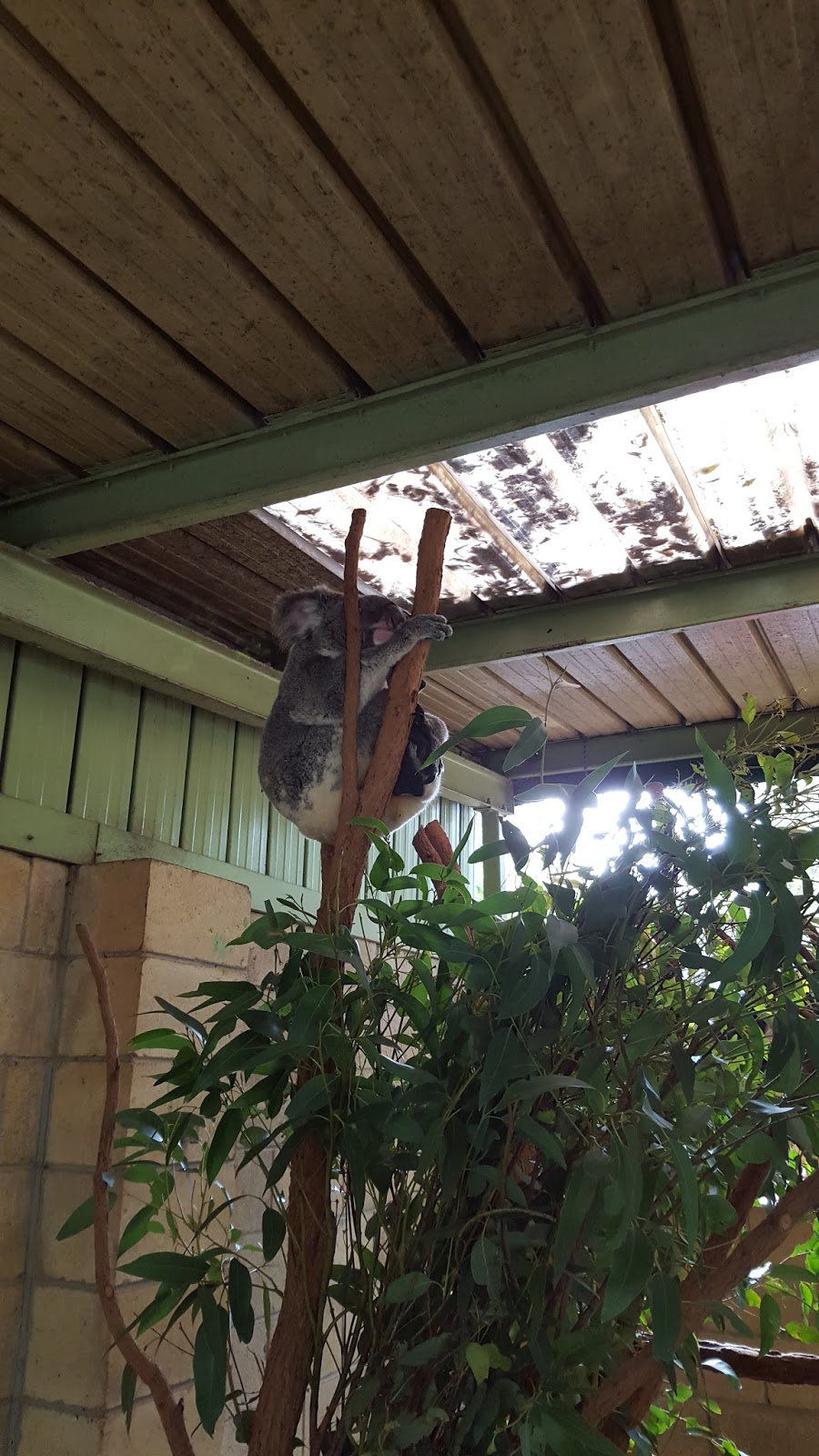
No matter, I enjoyed the long stretches of beaches, the towns with musical names like Bunberry, Yallingup and Dunsborough, the architectural marvel that is the Sydney Opera House, the bakery in the middle of nowhere which operated on an honesty system, the kangaroos who looked like they’d skipped upper limb exercises at the gym and the lethargic koala bears. I ate good food, went on long walks and enjoyed being able to cross the road without thinking; I reconnected with old friends. I returned home to find myself.   


20 March 2016

Down Under

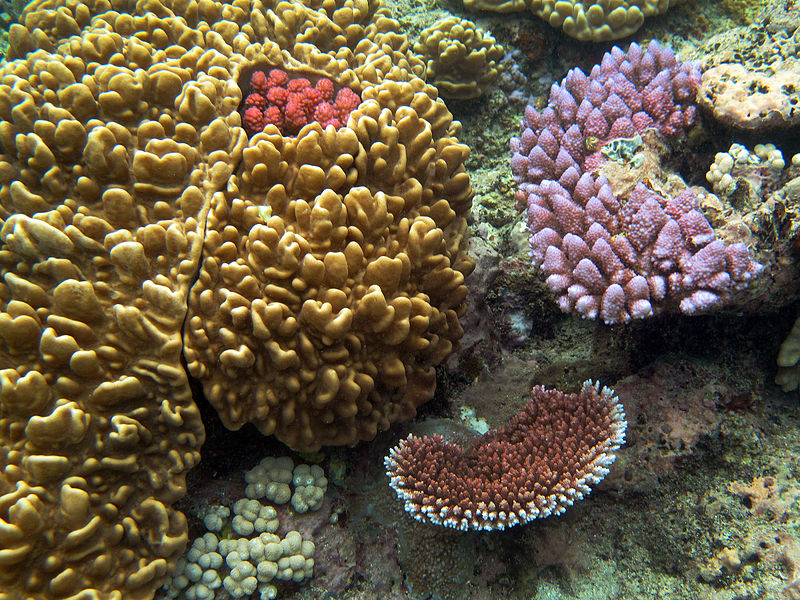
File:Great Barrier Reef 015 (5390533959).jpg
The Great Barrier Reef
[[File:Great Barrier Reef 015 (5390533959).jpg|Great Barrier Reef 015 (5390533959)]]


As I prepare for an upcoming trip Down Under, I have been reflecting on how much (or little) I know about Australia. Like Bill Bryson, I can’t seem to remember the name of the Prime Minister. I have never had a strong desire to visit, since in my mind it seems like half of South Africa must be living there, surrounded by shark-infested waters, there's the abominable treatment of the aborigines and it's not the easiest country to get to from here. 

Much of my knowledge seems to come from local television in the mid-70s…like programmes on the marvels of The Great Barrier Reef, and does anyone remember The Rolf Harris Show? That popped up from my subconscious when I woke up this morning. I could clearly recall the woolly bespectacled man with his wobble board, didgeridoo and accordion, introducing us to Waltzing Mathilda and Tie Me Kangaroo Down. And, of course, there was Crocodile Dundee.

According to a friend who has moved here from Adelaide, most of the cities are on the coast and except for Sydney, are “like Port Elizabeth with a little more going on”. As often happens, once you turn your focus onto a place, you start to gather all sorts of information, like it takes five and a half hours to fly from Sydney to Perth, there are multiple time zones and, according to another friend who heard me complain about the heat a while ago, if it’s 30 degrees she thinks it’s a cool day. That’s the other thing, I realise I have friends in at least four cities. At the end of the day, that’s really why I am going – to connect with people. 

Since, thanks to globalisation, I have more than a few items of clothing with Australian labels in my cupboard and even my hair products carry the .com.au logo, coupled with the Nicole Kidmans and Hugh Jackmans, I suspect that I may have absorbed more than a little of the culture. I am travelling to the largest island and the only continent to occupy an island, with an open mind. Will keep you informed, mate. 

P.S. Just in case I lose my sense of humour, I have packed a copy of Bill Bryson's Down Under

Down Under: Travels in a Sunburned Country, Bill Bryson

10 February 2016

District Six - We will Remember


Family and Friends Woodstock/District Six circa 1940s
My grandmother holding my mother on the right
Thursday 11 February 2016 marks the 50th anniversary of the declaration of District Six as an area for Whites only. District Six is now unrecognisable from what it was before its destruction but I have fond memories of the area where my grandparents lived and my father was born.

My father in his rugby-playing days circa 1950
One hundred years ago there was a vibrant community there of Indians, coloureds, Portuguese, Greeks and Jews. Freed slaves, merchants, immigrants, artisans and labourers all worked and lived peacefully side by side. They were an eclectic mix of cultures, religions and ethnicities in a melting pot typical of a port city like Cape Town … apparently a threat to the apartheid government. It would take about 15 years to move the 60 000 people out, to the Cape Flats, to areas like Manenberg, Hanover Park and Mitchell’s Plain.

My life revolved around Hanover Street, the main artery which ran all the way up from the city centre, into Walmer Estate where I grew up.  My grandfather’s tailor shop, later to be taken over by my uncle, was a hive of activity there; the doctor who delivered me in my grandparents’ home, had his surgery there where we would queue for hours to be seen, and Majiet’s barbershop was filled with people not necessarily having their hair cut, but playing dominoes and catching up on the news. A trip into town would inevitably involve a stop for roti and curry from the Crescent Café. My father says that you could buy anything in Hanover Street except petrol.

Central to the area was the spirit of kanala – a Malay word for “if you please”. Before it became District Six , the area was called Kanaladorp, a mixture of Malay and Dutch, referring to the way people assisted each other, or did favours for each other – a version of Ubuntu.

Malay choir
photo courtesy Ismail Lagardien
Tied up with my memories is the music which was played in the streets by minstrels, Malay choirs and Christmas bands, and the food with names like bredie, bobotie, denningvleis, frikkadels and oumens onder die kombers. One dish that, for me, represents the Cape with Malay, Dutch and Christian influences blended together with fragrant spices was pickled fish. I remember my maternal grandmother making it in the last week of Lent, to eat on Good Friday. She would make it well in advance to give the spices a chance to penetrate the fish, and also to free up her Friday when she would spend many hours in church. The best fish to use was geelbek, kabeljou or yellow tail which would have been bought either from the fish market on the corner of Hanover and Clifton Street, opposite the Star bioscope, or from the fish cart which did the rounds in the neighbourhood. The hawker would sound his horn to alert housewives that he had arrived with the catch of the day and they would come out to the street to haggle.

Weddings were communal affairs
Weddings and funerals were community affairs. When I was about six or seven I was a flower girl twice in the same year, once for my aunt, a Christian wedding and then for a Muslim neighbour, a dressmaker who sewed all the dresses for the wedding herself. The whole street turned out to see the bride when the wedding cars hooted to announce her arrival, and the neighbours followed behind to the reception in the Princess Street Hall. Funerals were another occasion when everyone would just turn up to pay their respects and support the family in any way they could. Christian men would borrow fezzes and take their turns carrying the bier of their Muslim neighbours. 

As the bulldozers moved in and the walls came tumbling around her, my paternal grandmother was banished to Mitchells Plain, far from the city centre where she had lived her whole life. She had been a fiercely independent woman, who had to earn a living after her husband died and left her to raise four children on her own. She made koeksisters and konfyt to sell door-to-door on Sunday mornings in District Six, and sewed and crocheted. She used public transport or walked wherever she had to go. What I remember most was her loss of independence. Suddenly she found herself in a foreign area without any infrastructure and no public transport to fetch her pension from the General Post Office in Cape Town. For the first time she had to ask for help.

My grandaunt and friend snapped by street
photographer while walking past the GPO
Central to my motivation for going back to university, was to equip myself with skills to tell the stories of growing up, not only my stories but the stories of those who cannot tell their own. We’re a deeply divided society, still trying to recover from a brutal past. We cannot sweep it under the carpet, sooner or later the bump will trip us up. When you strip away a people’s history you take away their pride. Telling these stories helps to restore dignity and help us to move forward. We need to know that someone sees our pain and understands.

Wall in District 6 Museum bearing names of former residents

I urge you to visit the District Six Museum. However painful the memories of apartheid may be, the exhibition there humanises the experiences while celebrating the rich diversity of people who once lived here. For me, it’s like settling into an old armchair and turning the pages of a well-worn family photo album. When I see the barber’s corner, the display case with the games we once played in the road, the photographs of the Peninsula Maternity Home where my sister was born or the wall-hanging with the name of the rugby club my father played for, I feel that our lives mattered. And when I walk up the stairs to the wall that bears the names of families who lived here, and I scroll down to find mine, I feel that our experiences have been validated and dignified. 


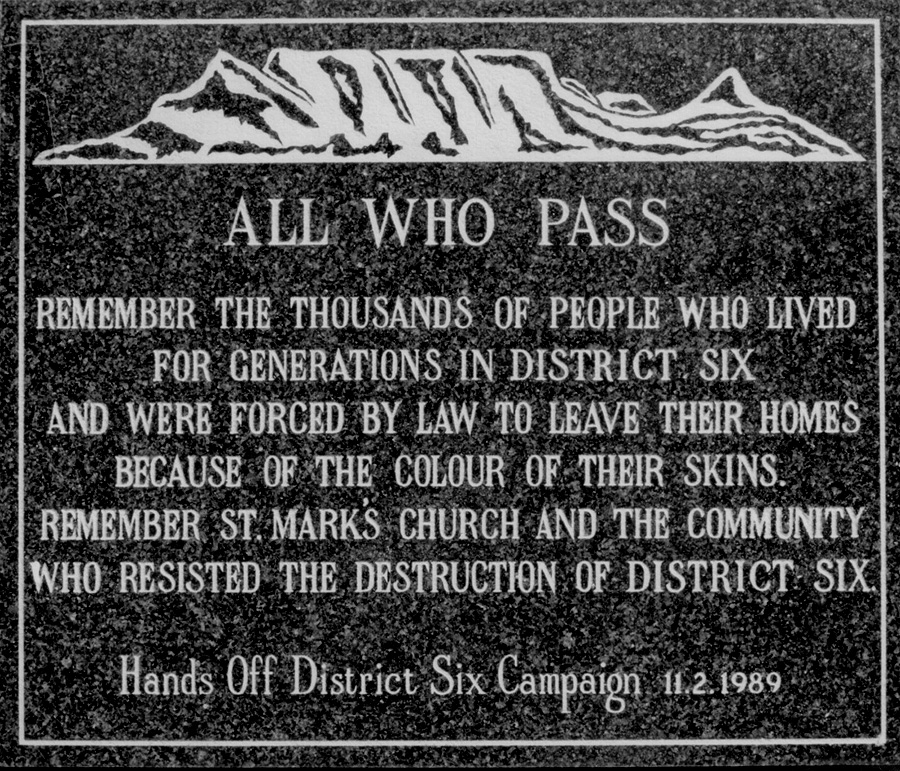
Memorial Plaque at the District Six Museum
https://upload.wikimedia.org/wikipedia/commons/1/1d/District-Six-Memory-Plaque.jpg


04 February 2016

Discovering Stories of Slavery

I finished reading Andre Brink’s Philida a while ago and it’s taken a long time to process the violence of the relationship between slave and master in the Cape during the 19th century. I remember hearing that the slaves in South Africa never had it has bad as their counterparts in America.  Of course, I knew that this was propaganda along with other things we were told about the benign nature of our history. However reading the details of rape, whipping, impaling on top of the humiliation of being sold/auctioned, objectification, and the cruelty the slaves were subjected to, was nothing short of distressing.

Brink was inspired by the story of a relative who had owned the farm, Zandvliet, which is now Solms-Delta*.  Francois Brink had fathered four children with his father’s slave, Philida. He had promised that he would marry Philida but the farm is in trouble and his father orders him to marry a white woman from an important family in Cape Town. It wouldn’t do to have reminders of his former transgressions. So Philida is sold and separated from Ouma Nella, the only mother she has known.

The story unfolds in 1830s just before emancipation. Brink, the writer, skilfully juggles with religion, the tensions between the English and Dutch, and relationship between the landowners and the slaves. There were places in the book, though, where I wasn’t sure that a woman would say something quite in the voice that he uses.

There’s a poignant scene in the book which has stuck with me. Slaves were not allowed to wear shoes and one of the slaves on Philida’s new farm secretly makes a pair for each of them so that they can celebrate the emancipation with shoes. And celebrate they do, “…running up and down the street…singing and dancing and kicking up the dust...from now on everything will be different.” Of course they weren’t really free as they were forced to spend a further four years serving an “apprenticeship” on the farm.

Andre Brink was the first Afrikaans writer to have a book banned by the South African government during the apartheid era. He challenged the policies of the Nationalist Party through his writing in books such as A Dry White Season and A Chain of Voices. He died almost a year ago today, aged 79. Philida was long-listed for the Man Booker Prize in 2012.

Philida reflects near the end of the book that “Ouma Nella’s stories… are all that remain now. Perhaps, when the end comes, they are all that can go on living.”


*When Mark Solms bought the farm in 2002, he set about uncovering its history, revealing not only the foundations of the first house built there, but also the remnants of a Stone Age site dating back about 5 000 years ago, and the story of Philida. A museum has been established to preserve the history of the farm as well as the musical heritage of the Cape.