Showing posts with label Sweden. Show all posts

18 October 2015

A Man of Character


I met Henning Mankell two years ago at an author's dinner. I had heard him speak the previous day in a talk entitled, A Man of Character.  I sat, enthralled, as he shared his experiences in Mozambique as the director of a community theatre and his involvement with various humanitarian causes. This is why I want to write, I thought. He spoke about greed which, he reflected, seemed to have become a virtue, about poverty - an unnatural state forced on people, and illiteracy - he thought we should be ashamed that we hadn't dealt with this problem yet.

Mankell spent half the year in Sweden and the other in Mozambique since the 1980s. He joked that he lived with one foot in the snow and the other in the sand. "Africa has taught me to be a better European," he said.

He was well-known for his crime fiction books which sold millions of copies and were translated into 40 languages. He explored the human condition through the protagonists in his novels; the mirror of crime tells of the contradictions in society. "Whatever I write, the reality is much worse," he said.

"We are a story-telling and a story-listening people," said Mankell at the dinner. "It is our capacity to talk and eventually to listen, that will save mankind." He told the story of two old African men sitting on a bench outside his theatre. They were talking about a mutual friend who died in the middle of telling a story. "That's not the way to die, without finishing your story," one of the men remarked.

Mankell died last week.  He has left many stories unfinished. 

Picture of author: Wikipedia Commons
For more on the author visit  http://henningmankell.com/

19 June 2015

Midsummer, Maypoles and Maidens

When the school year comes to an end, Swedes prepare to enjoy a five-week, nationwide paid siesta to worship the sun’s rays. Midsummer's Eve is always celebrated on the Friday between 19 and 25 June (very convenient for planning purposes). We’ve joined the mass exodus to the archipelago and summer houses, emptying the streets of Stockholm (and they really do empty, even the restaurants are closed. It's quite spooky!). 


The days stretch into balmy evenings at crayfish feasts set out on trestle tables draped in white cloths, on balconies and in gardens all over Sweden. Leisurely lunches of pickled herring, new potatoes and sour cream on rye or crisp bread are accompanied by bottles of schnapps and silly drinking songs. 


The wistful glow of light at midnight bestows a sense of magic on the summer. Midsummer night is the longest night of the year and was thought to be magical. On their way home young girls are supposed to pick seven different species of flowers and sleep with them under their pillows, in order to dream of their future husbands. 


The ancient pagan tradition of Midsummer marks the end of the spring work season and the beginning of the interlude before hay-making. At the local village green the celebration of light and fertility commences with reeling ring dances to the strains of accordions and fiddles, around a giant leaf-clad maypole. Thankfully, there are no longer virgin sacrifices although maidens in flowing dresses with flowers in their hair abound. Floral wreaths adorn front doors, gardens drip with heavy scents and bright flowers bloom on the side of the roads and tumble out of pots.


The Swedish summer is so short that I can appreciate the celebrations and I admire the psyche of taking full advantage of the sun when it's there. Though I'm still not quite sure about the following song performed by children and adults, with actions, alike: (must have something to do with the schnapps and aquavit).

The little frogs, the little frogs are funny to see
No ears, no ears, no tails they have!
Kou ack ack ack, kou ack ack ack!

Glad Midsommar! (Happy Midsummer!)

You may also like African violets, Bonfires and Daffodils

08 June 2015

African Violets, Bonfires and Daffodils

African violets need the sun  

My daughter has just returned from a stint in Prague where the temperature slowly climbed its way from 2 to 18 degrees C...spring, apparently! She's been complaining about the weather here since she came back. When I asked what she, a born-and-bred Capetonian, was going on about, she had two words for me - central heating. 

I must admit that I've been alternating between huddling over the heater in my study or melting my slippers beside the fire in the living room. Either winter has set in with quite a vengeance or that dirty little word, age, is responsible. But, there are few countries in the world where, in the middle of winter, you can experience the sunshine that we've had for the last few days. 

“There’s no such thing as bad weather, only bad clothes,” the pragmatic Swedes say, while wrapped up in several layers. Woolly hats and scarves, stout sheepskin-lined boots and jackets zipped up to their chins, is standard gear from October to April. We’ve experienced the country’s many moods, a reflection of the changes in weather. The seasons are defined, decisive and distinct, unlike the weather in Cape Town which, like a teenager with too much choice, swings wildly from one season to the next, often in the same day.


I’ve inhaled the crisp fresh air in spring, heralded by wild yellow daffodils bravely pushing their way up out of half-frozen soil. The country, emerging from months of enforced hibernation, seems to have a bounce in its step as it re-discovers itself. There’s anticipation in the new green leaves and a not-quite-warm-enough sun which nonetheless shines brightly in a clear blue sky. I’ve been tricked into shedding my scarf and jacket only to quickly regret having exposed myself to what masquerades as warmer weather. 

Summer is a time to celebrate. As the school year comes to an end, Swedes prepare to enjoy a five-week, nationwide paid siesta to worship the sun’s rays. But more of that later, since Midsummer is coming up. 


In the damp chill of autumn, when gentle rains fall from gloomy skies, the changing leaves float reluctantly down to the ground and quiet wisps of mist swirl through the trees. After an indulgent summer it’s time to get serious before the October snow falls. As the light starts to dwindle the locals scurry around like squirrels preparing to hibernate.


I haven’t been to Sweden in winter when darkness falls as early as 15h00 and friends say the drop in temperature causes a personality-change. Drinks on the wooden deck become a distant memory replaced by furtive dashes in and out of the garage. On St Lucia’s Day in December, processions of children led by a girl with a crown of candles, sing songs to bring light into the darkest month. I'm not sure that I would survive. I often joke that I'm like an African violet, I need the sun. 


Mediaeval traditions, to keep witches and evil spirits away, mark the end of the season. On 30 April a bonfire bids the cold farewell and welcomes the beginning of spring. The accumulated debris and leaves which have been vigorously swept up are piled high and set alight. Neighbours, who’ve been insulated against each other and the elements for months, emerge to party into the night, illuminated by blazes and filled with the crackling sounds of leaves devoured by flames. 

The rituals between the seasons create a distinct rhythm to life in the country and it seems that you always know exactly where you stand and what to expect. “The Swedish way is to gather information so that plans can be made,” a friend told me once. 

“In South Africa we tend to wait and see what happens,” I countered, “and then plan accordingly.”

And if the sun comes streaming in through the window,
take the opportunity to bask in it!

This is an extract from my masters' thesis. 

04 June 2015

Stockholm - a few of my favourite things


The Royal Palace, Stockholm across the water from The Grand Hotel.
Behind the palace lies Gamla Stan, the old town.


Proof that he's done it!
Friends have just been to Sweden to run the Stockholm Marathon and asked me about things to do there before they left. I am of absolutely no use as far as the marathon is concerned (I did Google it and learnt that it is one of the most scenic routes in the world, along many waterways and taking in the Royal Palace, Park, the City Hall and Opera House).

Stockholm is my favourite city in the world   ("We give you one winter and then let's hear if you still think that," warns a friend who would love to migrate south.) and there are a few places I can recommend. 


Here are a few of my favourite things


My favourite hotel = Hotel Skeppsholmen
Situated on a small island with the Museum of Modern Art and the Museum of Architecture as its neighbours. Last year I combined a visit for the World's Children's Prize ceremony with a stay to work on my thesis. Imagine brisk walks interspersed with writing in the dining room after breakfast, Norah Jones playing softly in the background. At least go there for breakfast or lunch or brunch if you’re not staying.


I have also stayed at The Grand – but it is just that – grand! Kind of like the Mount Nelson or the Table Bay. Also popular for tea. Across the road from the hotel is a little kiosk that belongs to them – good coffee to go. Have a kanelbullen. Oh, the Swedes drink very strong coffee…just saying.


The Grand Cafe

kanelbullen


Square with Nobel Museum on the right

You have to walk around the old town –  across the water from the Grand you will see the royal palace and that whole area behind it, is the old town Gamla Stan. It’s one of Europe’s best-preserved medaeval towns. The Nobel Museum is on the town square; worth a visit for some insight into Alfred Nobel's legacy. Also visit the restaurant, Den Gyldene Vrede, which dates back to 18th century. Nobel decreed that the committee which decides on the prize for Literature, meets here every Thursday evening. 


Typical street in Gamla Stan 

Sign outside Den Gyldene Vreden 

And then there’s a very different, funky restaurant Pubologi. It’s an experience. Book online before you go.

My favourite museum = FotografiskaThe cafĂ© at the museum has the most beautiful views of Stockholm and the restaurant is another eating experience – book for dinner.

And nice for a walk around inside and out – Waldermarsudde art museum; and have something to drink in the cafĂ© which is actually the original kitchen of the house of Prince Eugen (1865-1947).


Aerial view of Waldemarsudde from website 


Everyone says you have to visit the Vasa Museum but I haven’t yet. 
It’s the only almost-fully intact 17th century ship in the world. 


The ABBA Museum is another place I haven't made it to. 


And my favourite shop (for gadgets and because I can buy small gifts to bring back) – 

Designtorget
Photo: Visitstockholm.com

Visit the Sodermalm district for its vibey, alternative feel – shops, art galleries, cafes, etc. 

Take a boat trip in the archipelago if you have time and the weather is good.


Photographs of ship, ABBA, the kanelbullen and the medal, courtesy of C. Kotze.All other photos, unless otherwise credited, taken by me.  

16 May 2012

Rondebosch to Khayelitsha


Yesterday I travelled a relatively short distance from Rondebosch to Khayelitsha - it might as well have been on the other side of the world. We were going to one of the schools in the townships, all the way down Lansdowne Road, a familiar landmark on the Cape Flats. We went on and on for 45 minutes or more, leaving behind the tree-lined streets and high walls of the Southern Suburbs.

To start off, the road was pretty good and then gradually became more chaotic – cows were spotted rummaging through garbage on one side of the road, while on the other side, live sheep were for sale. A little further was a big open area where fires were going in drums which had been halved lengthwise, meat on the grill, fragrant smoke billowing into the air.

Here and there patches of green grass with colourful benches and tables hinted at previous attempts to encourage a communal gathering place. Along other stretches of road, shacks threatened to spill over into the road, so close that we could almost see right into their living areas.

Everything could be bought – mattresses piled high next to second-hand furniture, pre-assembled shacks of corrugated iron and wood, haircuts, general groceries and medical care. Streams of school children were making their way home past a billboard warning against the ills of drinking alcohol during pregnancy: “Your child needs a mother, not a dop”. Hooting taxis packed with weary travellers were weaving through traffic. A group of children on the back of a bakkie, passed away the time playing cards.

We attracted stares from curious pedestrians, wondering what our business was. We stopped to ask for directions only to be told to keep going straight ahead. At last we arrived at Chris Hani School where seven young girls were rehearsing for their trip to Sweden to perform in front of HM Queen Silvia. I can’t help thinking that our trip to see them was almost as far as the journey that they will make from Khayelitsha to Sweden!

11 July 2011

A Traveling Rite of Passage

As I write this my daughter is on a bus to the Eastern Cape on a school trip and my son is flying back from Sweden, where he has been on holiday on his own, for the last two weeks. Just over a year ago, I was on the back of an elephant in the jungle of the Golden Triangle, in the north of Thailand when it occurred to me that family holidays as we knew them were coming to an end. My daughter had been reluctant to come away with us then. She had been on exchange to Canada earlier that year and had a taste for hitting out on her own. My son was bemoaning the fact that there would probably not be anyone his age on that holiday. All in all, though, it turned out to be a great holiday. Besides the elephant trekking, we visited the Tiger Temple, and all got our PADI open-water diving licences.


And so here we are with them taking turns to leave the nest and giving me the opportunity to bond with one and then the other (or so I thought).  While my daughter has her exchange to Canada and her service trip to Thailand behind her, it is the first time that my son has been so far away from home by himself, for this length of time.  I think in many ways this trip has been a rite of passage for him. He has changed so much physically and emotionally over the past year, that it feels appropriate that we should mark it somehow.

He had to deal with the disappointment of not leaving as planned when we arrived at the check-in counter to discover that the UK visa he had would not allow him to travel without one of his parents, even though he would only be in transit. There was nothing for us to do but return home with the hope that we would be able to make a plan in the morning. He put on a brave face but I could see the disappointment.  

Thankfully we managed to get him onto another flight via Amsterdam the next night (and he didn't need a visa to use their airport!). As it happened, it did work out for the best (as mother said it would) as the KLM flight was more convenient.

By all accounts he seems to have had a wonderful time. It is hard to tell how much he has missed us since his communication is limited to one word, and at times one letter: ‘Y’ (why) or ‘K’ (okay). Our children have been travelling since they were babies and I believe that after every trip they have grown from the stimulation, the exposure to different cultures and the opportunity to leave home comforts and deal with change. I am hoping for a more detailed account and eager to see what difference this trip has made.

27 June 2011

"How on earth can we live together - How can we agree to agree?"


My family has previously attended this amazing forum which occurs annually in Sweden. Sigtuna is the oldest city in Sweden, dating back to  980. The Tallberg Forum brings together about 500 leaders from around the world, from business, government and civil society. The aim is to hold "conversations" to try to find answers to the problems that beset our world. Many sessions are open to the public and take place around tables in a big tent. Typically, the setting is one of natural beauty with music, poetry and culture interwoven. Check out the link below and take part in the conversation.


"How on earth can we live together - How can we agree to agree?"

The Tällberg Forum 2011, 30 June to 3 July, starts in the realization that todays established business models and governance frameworks are struggling to release the structural change that financial/ budgetary, social and environmental pressures are likely to require. Out of this analysis, comes the imperative for new coalitions of actors to step forward and drive new initiatives towards more radical change. This is true for business, civil society and politics.
The question for this year's forum therefore becomes: "How on earth can we agree to agree?" Because without a common understanding of the need to move collectively into a new paradigm, established interest resisting change will prove too powerful to overcome. Unfortunately, too much of the debate today is still stuck in the logic and thought models of the past.
Join the live streamed or OnDemand sessions to take part in these important conversations of our time.


31 May 2011

Castles and Inns


Most people go to Mariefred to see Gripsholms Castle. This quaint little town is about forty-five minutes drive west of Stockholm. The little wooden houses look as if they have been around for almost as long as the castle which was started in the 14th century and completed in the 16th. The Gripsholms Vardhus, where I have stayed, proudly displays the date 1609 above its front door. It is the oldest working inn in Sweden and the rooms are elegantly furnished. It overlooks the castle and water and in days gone by was the guesthouse for visitors to the king.

I have yet to take a guided tour around the castle – I am always there out of season – but have seen good bits of it. It is mediaeval looking; thick stone walls covered in original oil paintings and old iron railings going up well-worn stairs. In places you have to duck so that you don’t hit your head on the low roof. The Swedish pop group, ABBA, who sang the background lyrics to my high school years performed here. Apparently in 1974 the castle was used as the cover shot for their Waterloo album.


Mariefred train station
Although I came by car, there are other, more leisurely ways to get here from Stockholm. There is the steamboat S/S Mariefred which plies the waters leaving from near the king’s palace in Stockholm to the castle here. I heard that it is a three-hour journey on a hard wooden bench, though. There is also a train that comes from Stockholm to the next town and then you can take the cutest little train into Mariefred station. It really does look more like the blue train that goes round and round in Mouille Point.

Town Square

There is a town square, also called the mayor’s square, although there is no longer a mayor. Just like there is no longer any policeman, although the station is still there.

This was my third visit - the first two were very brief; all three have been for the World's Children's Prize for the Rights of the Child ceremonies. Since I was spending a bit more time, I was able to wander round the village, dipping in and out of shops displaying typical Swedish ware – simple, natural and classic. 

I took advantage of the beautiful weather to sit outside in the sunshine (like a good Swede, making the most of the sun while it is there). A wooden deck was under construction in preparation for the summer. Like everywhere in Stockholm, things were being fixed and renovated, in preparation for the warmer weather.  

I have been there in the autumn and spring so the weather has been cold and crisp with beautiful, sunny blue skies and flowers in bloom all over (this is where I have taken some of my best daffodil pictures). I can walk for ages all around the lake, through the park that surrounds the castle or just sit at the water’s edge. It's the kind of place you could take off to, to write that book you have been promising to write...

17 May 2011

Stockholm - Venice of the North

“It is not a city at all. It is ridiculous to think of itself as a city. It is simply a rather large village, set in the middle of some forest and some lakes. You wonder what it thinks it is doing there, looking so important.” 

          
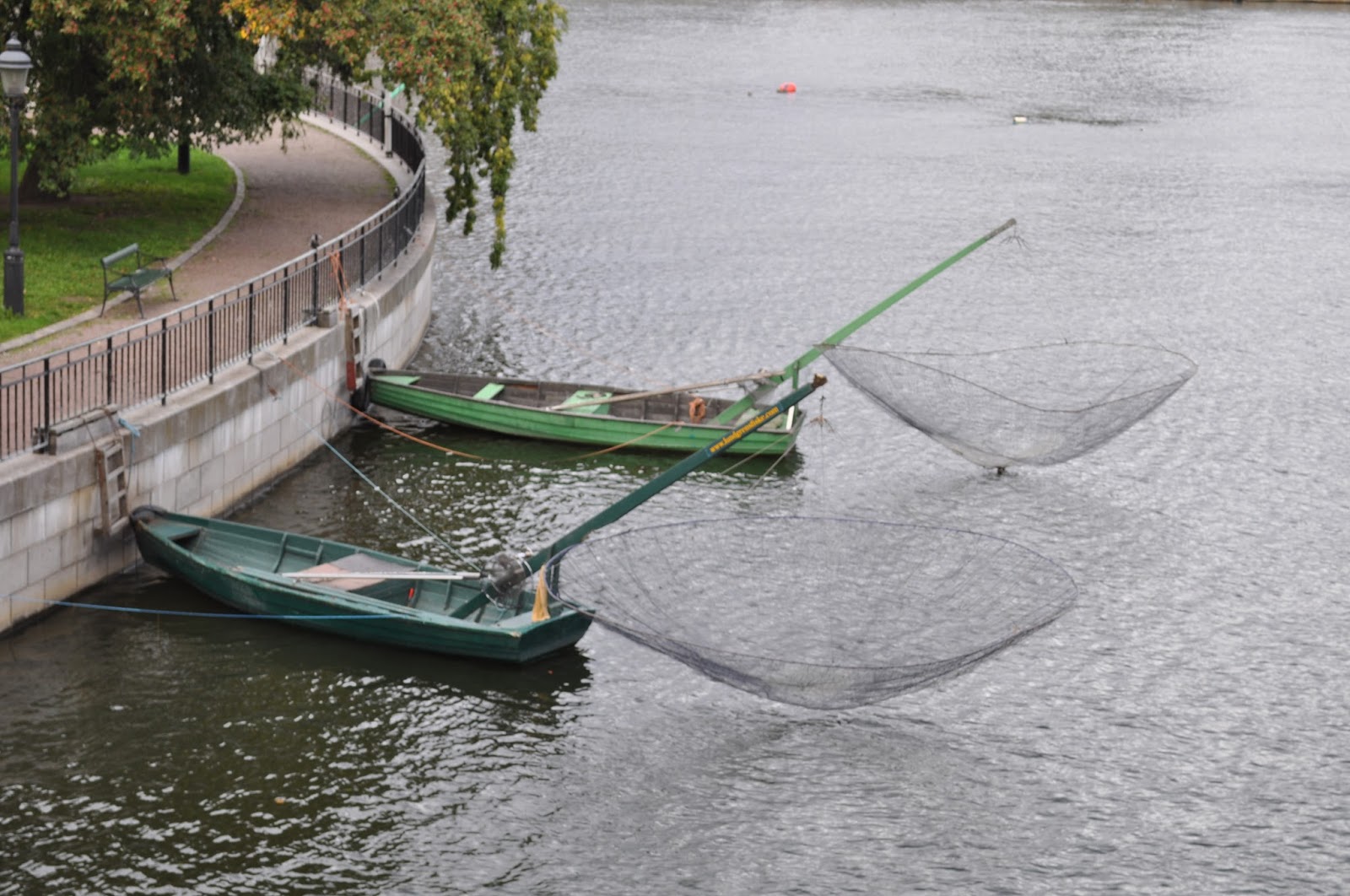
I love this quote by Ingmar Bergmar talking about Stockholm.  It really does have the feel of a village, a really old village. The old buildings sit side by side with tall skyscrapers. It is not unusual to see people fishing over a bridge into the clear, fresh water in the middle of the city. I remember last time looking for the city hall,  sure that I would readily find it – except all the buildings look like city halls (or churches and palaces).

This was my third visit to Stockholm.  The first time we stayed in Gamla Stan or the “old city” and dined in the same restaurant, Den Gyldene Freden (The Golden Peace) – est. 1722, where the Nobel Prize for Literature was being decided upstairs. The committee members looked as if they had been around for as long as the restaurant!

Stockholm is one of the most beautiful cities that I have been to. It is set on 14 islands (hence the name, Venice of the North) and the water adds a certain charm. Cobble-stoned roads invite you to explore history minutes away from broad, busy modern roads. Parks with trees and benches are dotted all over the city.

This time a friend and I walked through the very Bohemian area of Sodermalm. Shops open late here  - 1030 or 1100 - which was a good excuse to duck into a coffee shop, Frantzen’s. On the counter was a yummy display of home-baked goodies. The cinnamon buns exuded a spicy aroma that was hard to resist and certainly lived up to the promise. In fact it must have been the best cinnamon bun I have ever eaten – slightly crisp around the edges, soft and filled with spices in the whorls.

Fortified we set off – in and out of art galleries, home-ware and clothing shops. The wares on sale were typically Swedish – linen and wood, glass and terracotta – natural and simple. Clothing was finished off with edges of lace and embroidery. We dodged dads out with their toddlers in prams. The Swedish have generous maternity leave of up to 18 months and paternity leave, too. So the mums take the first stretch and do the breastfeeding, etc and then go back to work and the dads take over for a while.

My favourite shop was grandly called the Tea Centre of Stockholm. Entering was like stepping into another world. Dark wood counters were stacked almost to ceiling height with row upon row of tea canisters, many accompanied by glass jars with samples to smell before you made your choice. Electric light glimmered on the polished surfaces and the exotic smells of tea from Morocco, Sri Lanka, India and other far off places, filled the air.


And then the owner made an appearance looking exactly like I would have imagined. Sleeked back hair, round, wire-rimmed spectacles and attired in a dark pants and waistcoat over a white shirt and tie, his skin almost as dark as the woodwork. He was from Sri Lanka and was an expert on teas; although I had to resist getting into a fight about the benefits of Rooibos (he was of the firm opinion that it had none!). We settled for a special blend named after the area in a quaint tin with images of the palace and city hall. The sale was rung up on an old-fashioned cash register. We stepped out into the sunshine with our purchase. Right opposite was a church with tiny graveyard dwarfed by tall bare trees. But in the middle was a little tree bravely heralding spring, all decked out with white blossoms.


Each time I have been to Sweden it has been either spring or autumn. The temperature is around 10-15 degrees, the air crisp and fresh. I love that the sun shines brightly and the sky is as blue as an African sky. Autumn feels like the locals are running around trying to make the best of the good weather and spring feels like the city has woken up from a long sleep and re-discovering itself.

We ended our morning with lunch at Le Gondolen restaurant which boasts grand views of the city. On the way home I could not help leaning out of the car window and taking yet another picture of the trees in bloom.

06 May 2011

A Picture is worth a Thousand Words


Fotografiska is the red building on the other side of the water
On my last day in Sweden, friends invited me to visit the new photographic museum, Fotografiska, with them. Since I have an interest in photography this seemed like an excellent way to spend a Sunday afternoon. A very packed tube journey later (Labour Day was being celebrated all over the city with marches and rallies) we arrived at the building on the edge of the water. Three photographers were being exhibited – Albert Watson, Edward Burtynsky and Jonathan Torgovnik.

We started on the lower level with the Scotsman, Watson. He has made a name for himself as a fashion photographer, having photographed the likes of models, Naomi Campbell and Kate Moss, as well as famous sportspeople and singers. The variety in his work is so huge that it is hard to believe that all the photos were taken by the same person. On display were some unusual variations like the headshot of Mike Tyson taken from the back. He also had and interesting sequence of photographs of Michael Jackson taken in the 1990’s. The photos seem to have been cut into strips and then put together again.

Moving up a floor, we found the environmental photography of Canadian Burtynsky . He has done a series of photographs of our relationship with oil and depicts the destruction of the land and sea through drilling. There are also photographs which show the waste related to the industry like piles of discarded tyres and graveyards of rusted cars and planes.

The final section was the heartbreaking account of the Rwandan women and the children who were born from their rape during the genocide. I think I managed to read three of the stories which accompanied the photographs before I was so overcome with sadness that I had to leave. After the very emotional few days I had with the World's Children’s Prize, this was just too much to bear.

Jonathan Torgovnik has systematically recorded the stories of some of the thousands of Tutsi women who were raped in 1994 and “the children of bad memories” as they are called. In one of the stories a woman who tells of her ordeal makes it so clear that there was no way that she was able to love this child she had borne. On one level I could understand that, but on another I felt such pain for this child who has been condemned to grow up without love.

Many people were visibly moved by the exhibition and I was hyper-sensitive to the tension in the room. I moved off into the area where a video interview with the photographer was being shown. He was making the point that many of the men who committed such horrible crimes have simply moved over the border and are probably doing exactly the same thing in the Congo or somewhere else. I am constantly amazed by the pain we as humans can inflict on one another, and especially on the children who we have been entrusted to take care of.

View from Fotografiska
We retreated to the restaurant to compose ourselves with a cup of tea. The huge windows look out over Stockholm, light years away from the worlds we had just been exposed to. The museum is worth a visit. 

For more on the photographers and their work visit:
Jonathan Torgovnik has also started a foundation to help the mothers and children.

23 April 2011

Magic in the Music Part 2

The little orange classroom was bathed in sunlight and vibrated with the sounds of old South African greats like Miriam Makeba and Hotep Galeta, as well as newer ones such as Mango Groove and Mafikizolo. The seven teenagers, with shiny faces and new hairdos seem to have grown in confidence and stature since I first saw them just over a week ago. They were smiling, animated and comfortable with their performance.


In smart costumes with a clever blend of traditional African and modern Western, they represented both the past and the future of our country. They debated whether the colourful collars of their white shirts should be up or down. The girls had braided their hair  and looked chic in their fitted dresses of many colours with beads around their ankles, wrists and neck.

We had come to see the dress rehearsal. The chief supporter, in the form of one of the grannies was in the small audience while Ian, the director, looked like a proud father.  It had been a challenge because of the age limit of 18 – they are the Delft Big Band beginners, but the performance was anything but beginner.

Yesterday my daughter and I went to wave them off at the airport. It was quite an emotional departure – many tears mixed with a lot of excitement. As they waved goodbye to the small group of family and friends, they were saying farewell to many familiar things – they were about to get a taste of the big world out there, broadening their minds along with their horizons – a story to tell their grandchildren. 


12 April 2011

Changing Seasons

From where I sit at my desk I can see the squirrel at the bottom of the garden scurrying around all morning collecting sustenance for the winter that he probably feels coming in his bones. On my walk this morning leaves rustled across the path in front of me and crunched under my feet. Tall oak trees leaned into each other as if bracing themselves for the loss of their scorched, end-of summer leaves. There is a nip in the air, the nights have become longer almost without our noticing it. But like a teenager with too much choice, the Cape Town weather seems to have not quite made up its mind. Yesterday the temperature was a scorching 28 degrees in spite of forecasts of an approaching cold front. And as anyone who lives here knows, the weather can be relied on to swing wildly from one extreme to the other for pretty much of the year.

That's why, on my first trip to Sweden, I marvelled at the clear distinction between seasons: leaving you in no doubt where you are and what to expect. This was early April and the locals were excited at the advent of spring. I have been to in January (-25 deg), Mauritius in December +(36 deg) and even Madrid in springtime (sunny mild days) – but this was the first time that I had been so far north and experienced the change of season so dramatically.

We stepped out in 2 degree, bright sunshine and clear blue sky - “A good day for a funeral!” as a British friend remarked. My African self was warmly wrapped up in a winter coat and boots. Bright yellow daffodils bravely pushed their faces up out of the cold, hard earth, heralding the spring.

daffodils in Mariefred - April 2008

This time when I go, I am looking forward to the bonfire held on the last day of April. All the leaves are gathered and set alight – bidding the winter farewell once and for all and making way for warmer weather. It occurs to me that we may be more affected by the weather than we think. As a Swedish friend has observed to me recently: the Swedish way is to gather all the information so that plans can be made;  in South Africa we tend to wait and see what happens. 

11 April 2011

Magic in the Music

Right next to the Cape Town International Airport is a township known for its high crime rate, poverty, unemployment and controversial housing project. Curiously, it is named after one of the leading cities in Holland, well-known for its porcelain and famous painters. It is also known as one of the prettiest cities in Holland. The Delft that I visited this morning was anything but pretty. The wind swirled plastic bags around, people and dogs milled about on the streets, and informal traders tried to earn a living from their meagre stalls.

We found the grim-looking Voorbrug High School behind barbed-wired walls and tall gates. It looked safe enough, but I was wary – this was not on my usual route. We parked, wondering if we were in the right place as there was no other car about, but as we opened the doors the sounds of jazz beckoned. One of the classrooms is being used as a rehearsal room for seven teenagers who are about to embark on the journey of their lives. They have been chosen to perform at the Award ceremony for the WCPRC in Sweden at the Gripsholm Castle in front of Queen Silvia. None of them have ever been on a plane.

When I was asked if I knew of  a group who played anything jazzy to recommend for the WCPRC ceremony, the Delft Big Band immediately sprang to mind. I have been privileged to be in the audience on a few occasions when the band performed. The band is directed by Ian Smith who has been working with them for two years. Using hand-me-down instruments and a lot of passion and energy, Smith is giving these children something to aim for, to take them out of the cycle of gangs, drugs and poverty. I have written about the project in my blog on the Tenth Sekunjalo EduJazz concert. 


The seven teenagers have been chosen from this project. They are hard at work practising their repertoire of South African jazz and are promising to do us proud. I feel so privileged to have experienced the magic that is coming out of a township as bleak as Delft. As we left the school we watched an airplane come into land as another took off. Living next door to the third busiest airport in Africa, these children must see planes arrive and leave every few minutes. Next time they will be on one of them.